Free guide
The Homework Diary
A simple paper system so you're not the one holding every due date in your head.

Sarah Walker, teacher of 20+ years, with firsthand experience of ADHD at home.
For a teenager with ADHD, the hardest part of homework is rarely the homework itself. It's remembering what's due, when, and what it actually involves. A diary can close that gap, if it follows three rules.
The 3 Rules
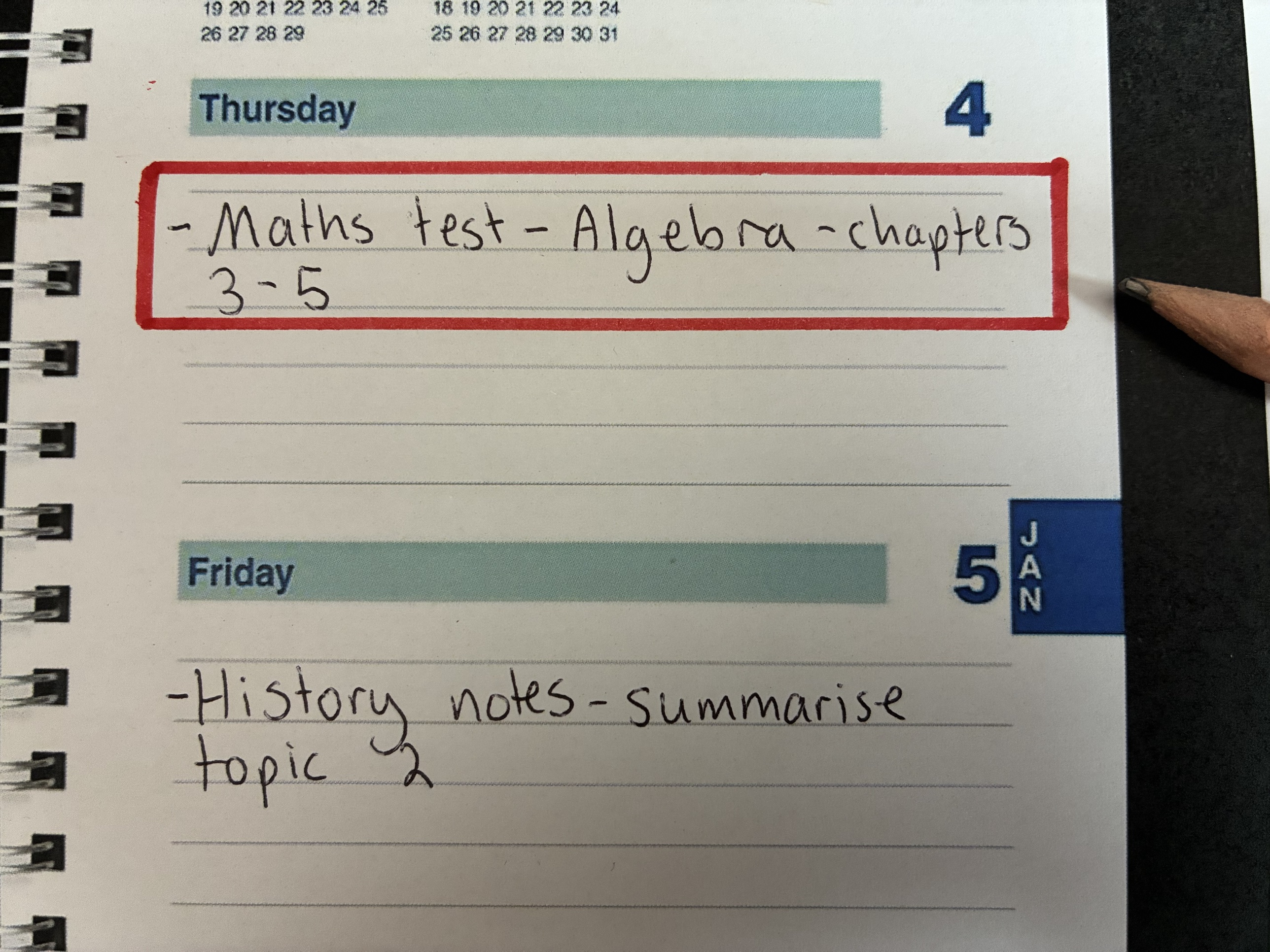
Any diary works, but a week-to-a-spread gives room for real detail.
Written on the day it was set, a task sits there getting older until it's suddenly overdue. Written on the day it's due, there's nothing left to work out. It's just there.
A vague entry like "English homework" means stopping to remember the details before starting can even begin. That extra friction is the last thing a reluctant starter needs.
In a week of similar-looking entries, a test can sit next to a reading log and look just as small. A red box makes it obvious what to prioritise, no reading required, so there's one less thing to work out before starting.
Who fills it in
Your teen writes it in, not you. Sit with them for the first week or two if they need it, then step back. A diary you fill in tracks their homework. A diary they fill in builds the habit.
Getting the information home
Due dates come from the school portal or straight from class. The diary needs to go to every lesson and come home each day. Keep it in one place, either the school bag or a locker. A sticky note is a handy reminder if it lives in a locker.
The bigger picture
Optional, but worth adding once the diary's running: a whiteboard with the whole term on it eases the mental load even further, and makes time easier to manage. Write every exam and major assessment on it, then put it where homework actually happens, the kitchen table or a desk. Seeing it all at a glance means nothing shows up as a surprise, with enough warning to actually prepare.
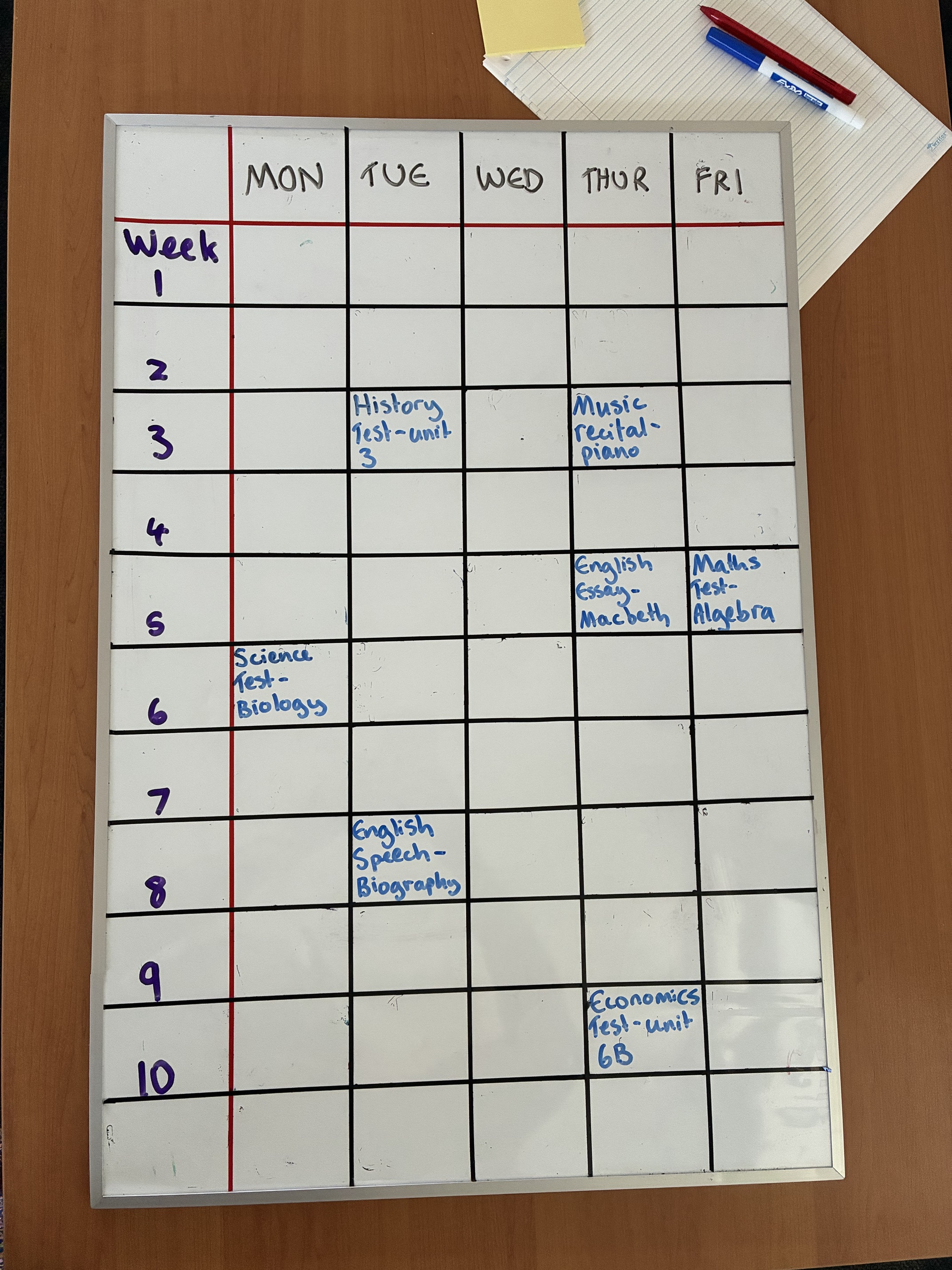
The whole term, one glance.
For more on getting your teen on board and making it stick, watch the video.
Watch nowA diary that works solves one part of homework: knowing what's coming.
Everything after that is taught step by step in Homework Reset: getting started, staying on track, and walking into the test ready.
www.sarahwalker.au